The useful question is not whether the label sounds complete. It is whether the weight and dimensions describe the same physical freight. Keep that question separate from selecting an NMFC commodity item or obtaining a carrier quote.
The carrier example includes the pallet
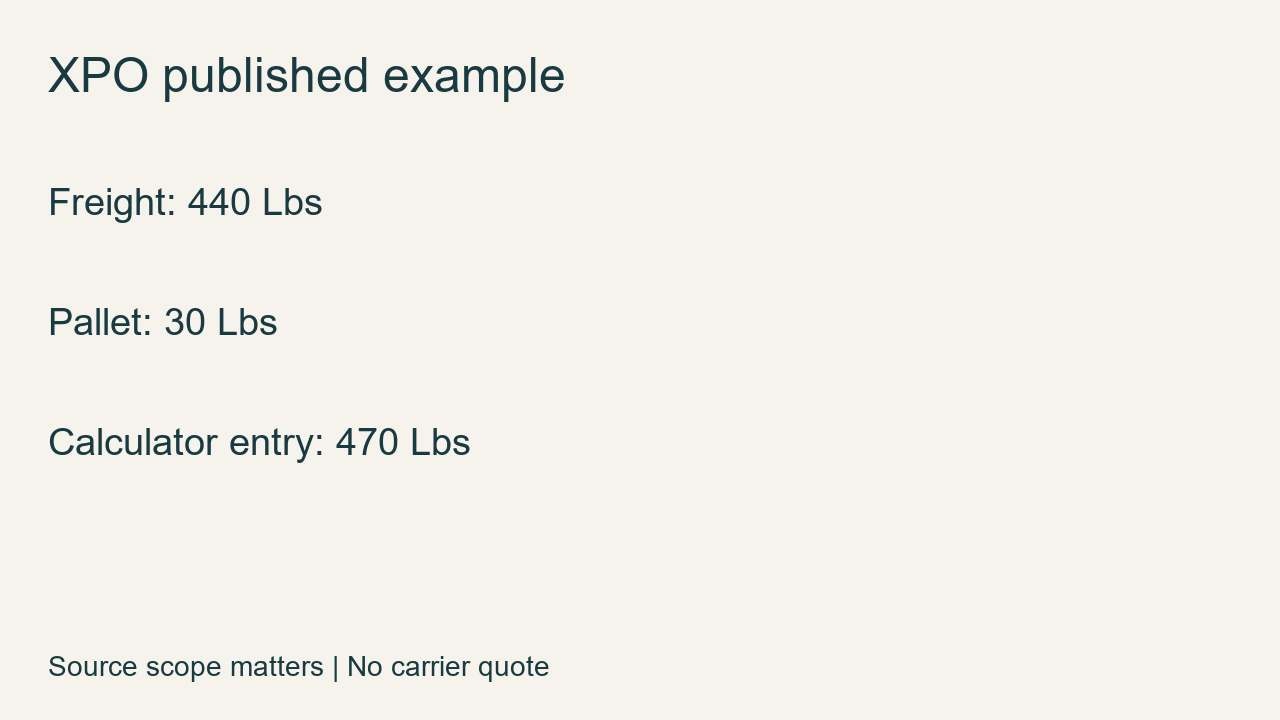
XPO's Measuring Tips gives an example with 440 Lbs of freight and a 30 Lbs pallet, producing a 470 Lbs calculator entry. Those figures are XPO's published example, not measurements of a shipment handled by this site. The addition is 440 + 30 = 470 Lbs. It illustrates including a support that was outside the starting weight, not adding a pallet to every number labelled gross.
In its general guide to shipping weight, Maersk describes gross weight as including products, packaging, pallets and the shipment container. That guide discusses several transport contexts. Its definition is useful background, but it is not a reason to add an ocean container's weight to an individual pallet entry.
A historical record uses the label differently
An older document shows why the field definition matters. The RAPID EDI guidelines in AgGateway's public archive are dated April 1998. PDF page 9 defines the W20 qualifier G as gross weight excluding the pallet; page 10 includes shipping and packaging in the line-item weight. This is historical crop-protection implementation guidance, not a current universal rule or LTL tariff.
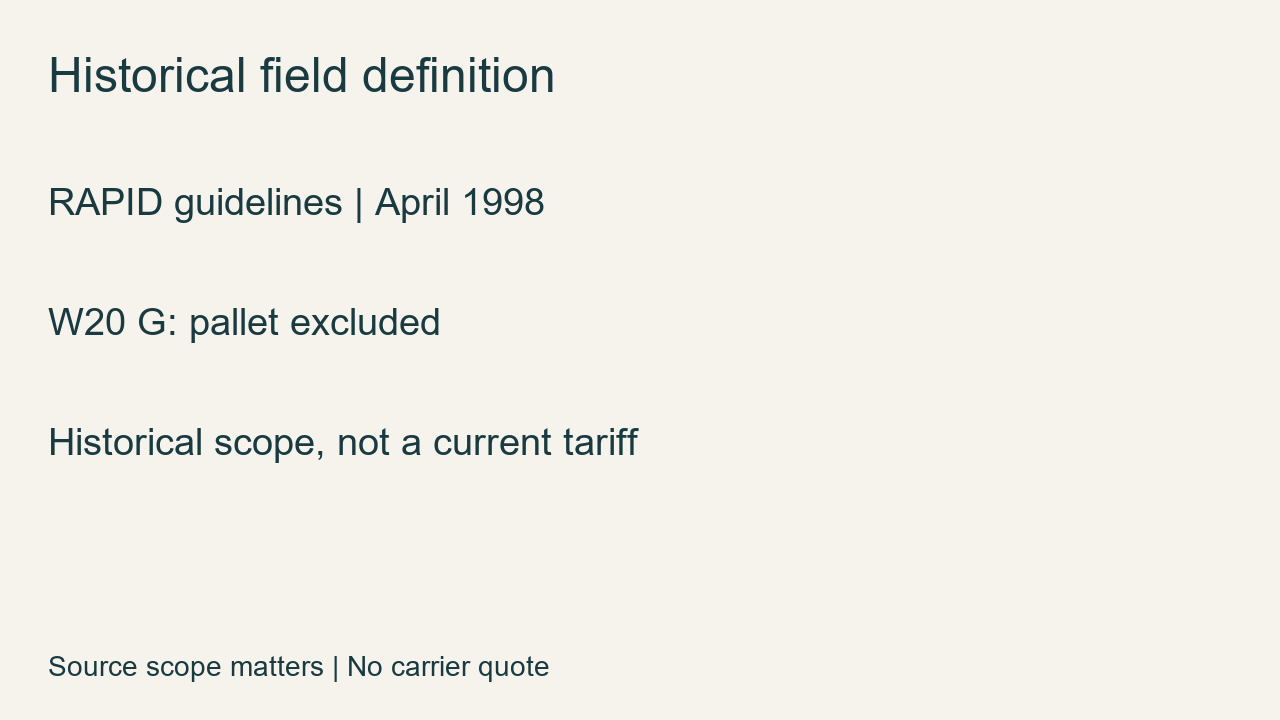
That historical mapping is not a rule for today's trading partners. Read the W20 explanation in its own context before relying on the field name.
Ask what the number represents
My proposed review starts by identifying the origin of the weight entry. Was it recorded for the finished handling unit, copied from a product record, or imported from a partner's shipping message? Keep the field description beside the number while resolving that question. This is a proposed reconciliation method, not a carrier-required form or a measured improvement in billing accuracy.
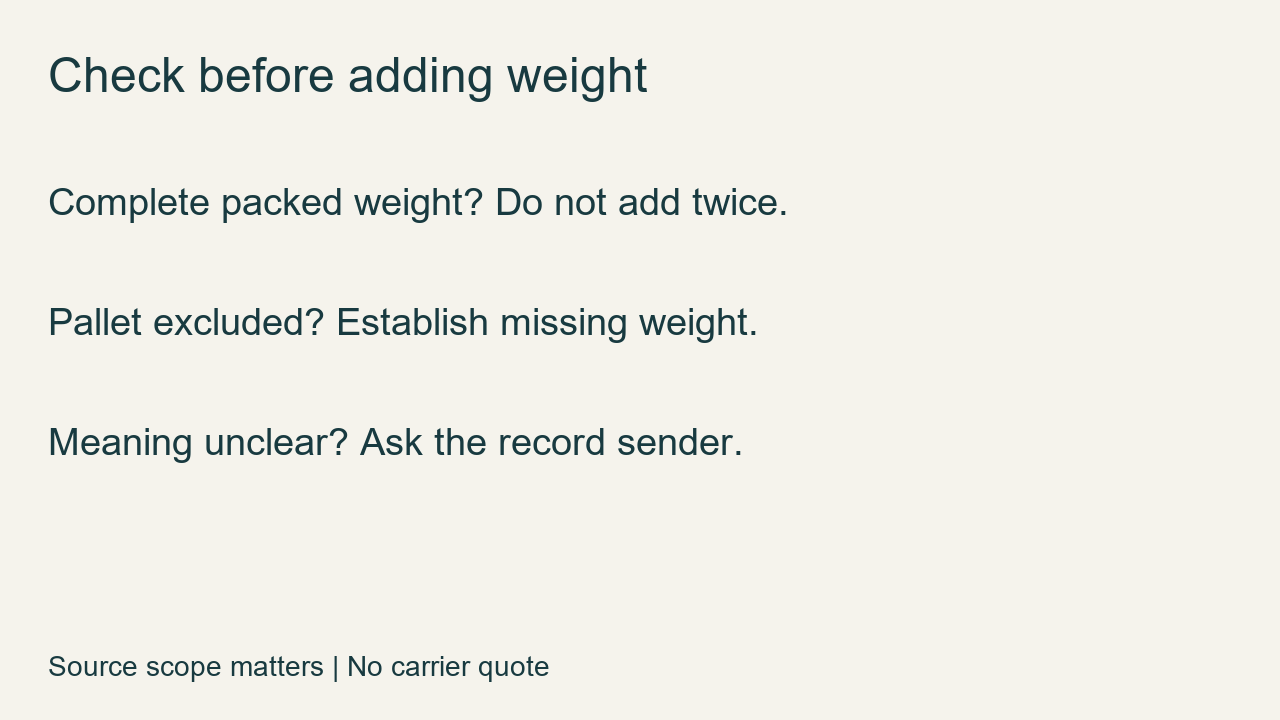
If the record excludes the pallet, establish the missing weight from a reliable record or measurement before preparing the calculator input. If the record already covers the finished load, adding that same support again would count it twice. If the definition is unclear, obtain clarification from the sender of the record rather than silently treating it as product-only or complete.
Keep the weight paired with its volume
Before calculating, confirm which handling unit the weight belongs to. The pallet measurement guide explains the separate task of recording the outside packed envelope. This page resolves what the weight record includes; it does not repeat the measurement procedure.
Once that scope is clear, enter the packed dimensions and loaded weight in the freight density calculator. Keep the recorded weight unit with the entry. A change to the selected unit is not evidence that the packing arrangement changed.
Questions to resolve before entry
Should I always add the pallet weight?
No. Add a missing component only when it is outside the starting weight. A complete packed weight already contains that component. Check the record's definition before doing another addition.
Can the calculator decide which record is correct?
No. The tool calculates from the values entered; it cannot establish what a supplier meant by a field label. Retain the source record and the explanation for any correction so the calculation can be traced back to its inputs.
Does correcting the weight confirm the freight class?
A corrected input helps the calculation describe the intended handling unit. It does not identify the commodity or establish which classification provisions apply. Keep a density estimate separate from a confirmed commodity classification.
Source scope
The example figures come from XPO's current public measuring page. The historical qualifier comes from the dated RAPID implementation guide, with the adjacent explanation retained for context. Maersk supplies a general terminology comparison. These sources were checked for this page; their juxtaposition is not proof that the discussion is unique across competing sites. No carrier prices or new density-class thresholds are supplied here.