Measure the finished handling unit before entering its dimensions. A calculator can use the values you type, but it cannot see a carton extending beyond the base or tell whether your weight excludes the pallet. This page focuses on preparing those inputs, not choosing a commodity code or promising a carrier's final classification.
Freight class estimator: measure the packed footprint
Start with the load in its shipping configuration. Estes describes dimensioning in terms of the freight's maximum length, width and height, and explains that its equipment measures the extremities to establish the space occupied. That makes the outside envelope the useful starting point, rather than a carton specification copied from a product listing. See the carrier's dimensioning explanation.
XPO's measuring tips explicitly include the pallet in the dimensions used for cubic volume. Its explanation also includes the pallet's weight in the calculator input. Do not treat those as separate shipments merely because the product and its support have separate descriptions in your inventory system.
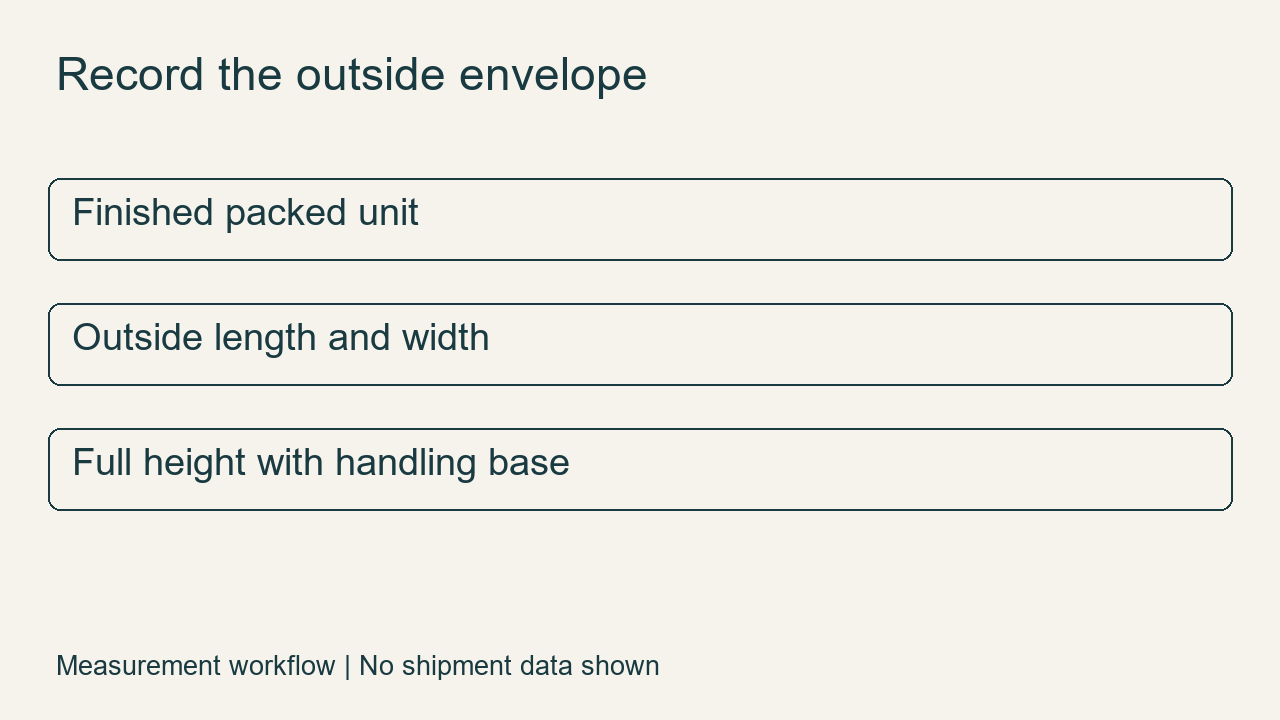
My suggested recording method is to give each handling unit a short identifier before measuring it. Put the identifier beside its dimensions and weight, rather than keeping a loose list of measurements to match up later. This is a proposed workflow for keeping inputs together, not a carrier-mandated form or a report of a warehouse test.
Determining freight class calculator inputs: keep height and weight together
For a palletized unit, the height measurement must describe the complete unit, not only the cartons sitting above the base. The width and length should describe that same packed configuration. If the arrangement changes before tender, the old dimensions describe the earlier arrangement and need checking again.
Record the weight unit next to the weight field. A dimension measured in centimeters does not identify whether the recorded weight is pounds or kilograms. Keep the original measured entries available when you change the calculator's unit selectors, so you can distinguish a unit correction from a physical change to the load.
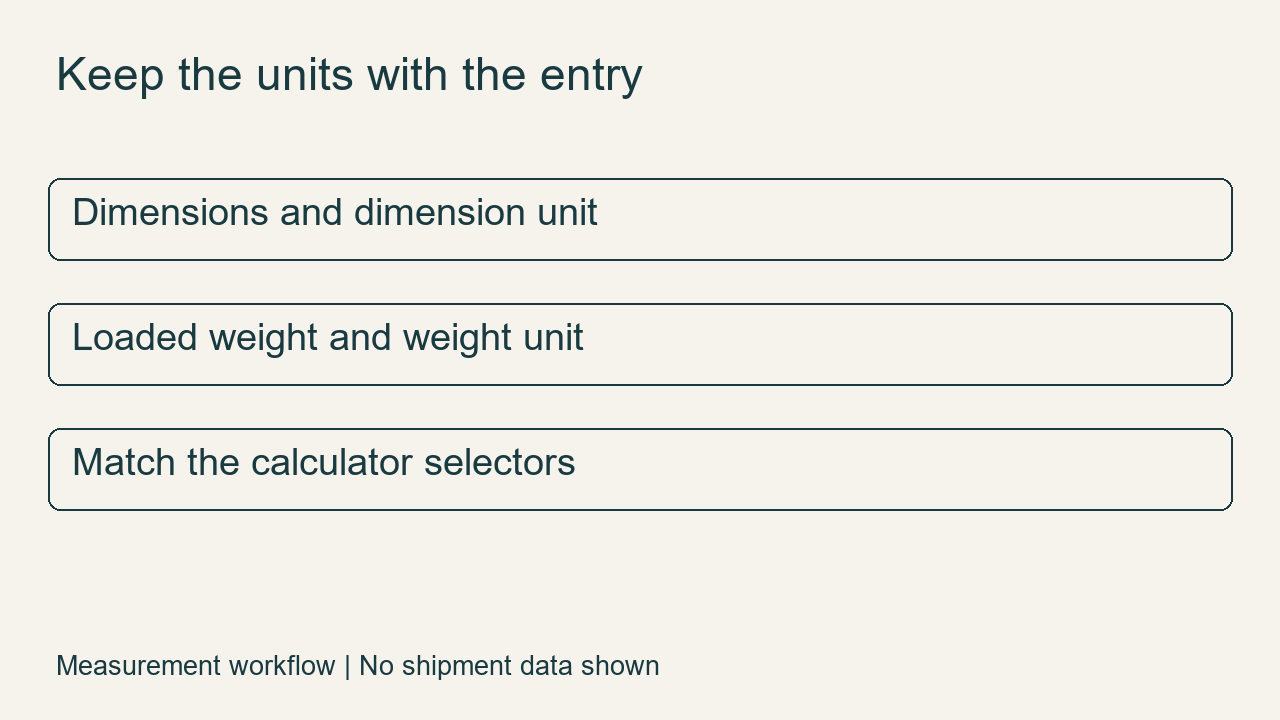
I would also keep a short note explaining the measurement endpoints. For height, that note can identify the bottom of the handling base and the top of the packed load. For an irregular footprint, it can identify which outer points set the envelope. The note records what was entered; it does not establish that a carrier accepted those measurements.
Use the freight density calculator once the dimensions and loaded weight are ready. Check that its entry labels describe the units on your measurement record before interpreting the result.
NMFC class calculator: separate a measurement correction from a classification question
Changing an outside measurement changes the information supplied to a density calculation. It does not explain what the goods are. Keep a question about the packed envelope separate from a question about the commodity description or an applicable classification rule.
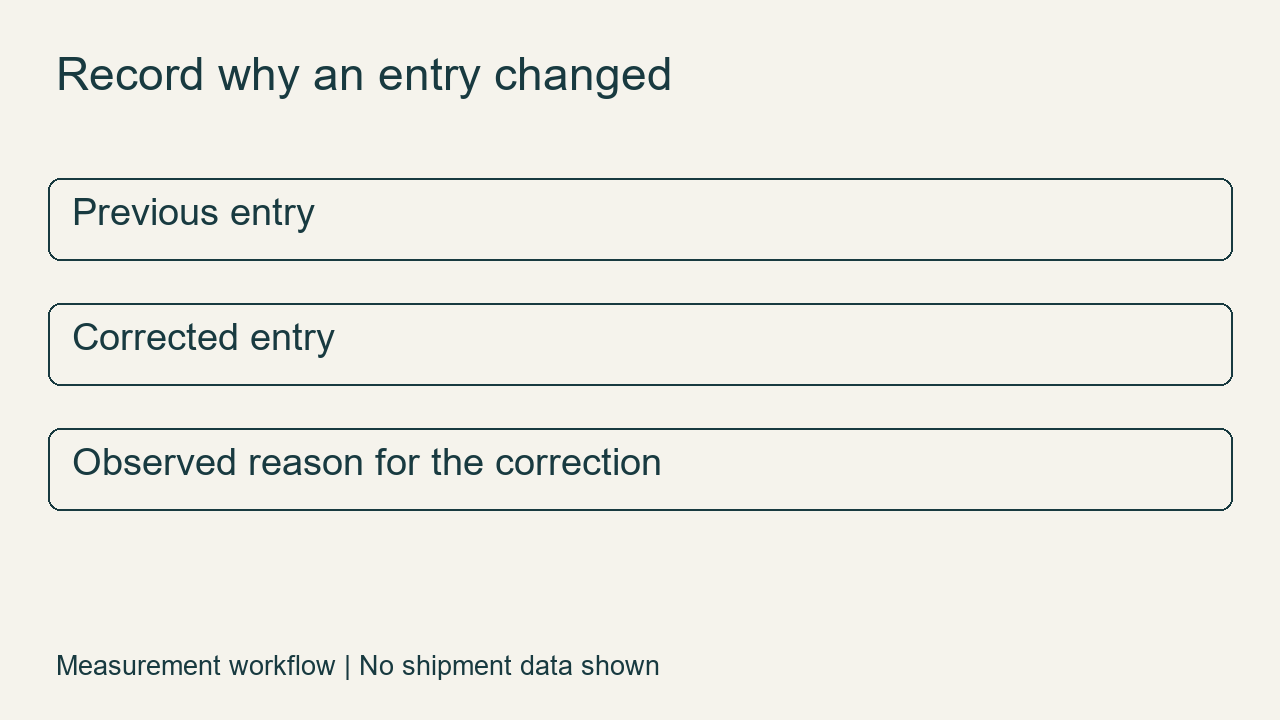
For a comparison I would retain the earlier entry and write the corrected entry beside it, with a plain-language reason for the change. Useful reasons describe the observation, such as adding the handling base to the height record or correcting the selected weight unit. Avoid describing the reason as wanting a different class; that does not say what was measured differently.
Before using a saved quote, compare its shipment description with the unit now ready for pickup. This is an input review, not a guarantee about the quote, a tariff decision or a way to override the carrier's classification process.
NMFC freight class calculator: keep separate handling units separate
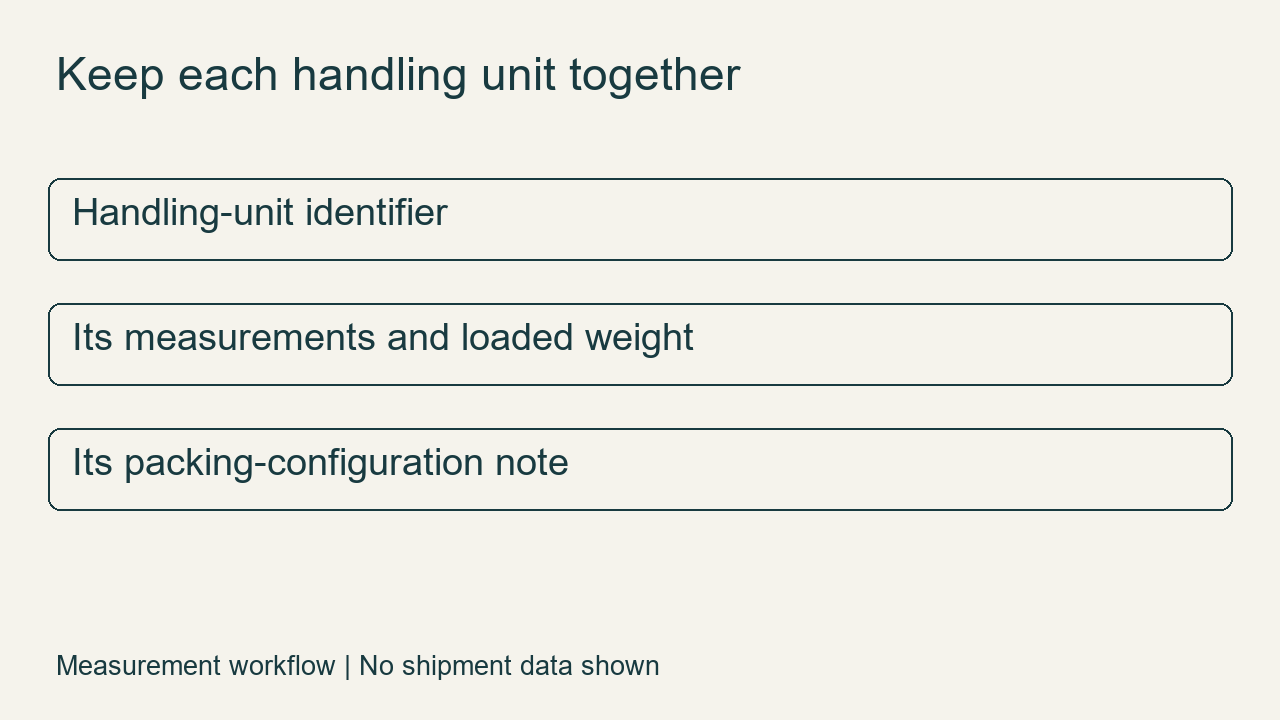
A measurement record should make clear which weight belongs to which footprint. If your pallets differ, keep a separate entry for each rather than attaching the combined shipment weight to a convenient pallet's dimensions. The calculation is only interpretable when its weight and volume describe the same collection of freight.
My proposed handoff record has a place for the handling-unit identifier, the outside measurements with their units, the loaded weight with its unit, and a note about any packing change. It also leaves space to identify whether a reading is current or copied from an earlier packing arrangement. Those fields are an editorial suggestion, not evidence that the process has been tested by a carrier.
Freight density calculator questions before entry
Should I copy the product dimensions?
Use measurements that describe the finished shipping unit. A product dimension can be useful for planning, but it does not by itself establish the envelope of the product after it has been secured to a pallet.
Can the calculator tell me how many items fit on a pallet?
The question “how many items fit on a pallet?” concerns a proposed loading arrangement. Measuring the finished unit is a different task. A density calculation does not establish that a proposed stack is safe or that its dimensions match the load you eventually build.
Does a clean-looking result confirm the measurements?
No. Revisit the inputs when you find a mismatch between the record and the freight. An internally consistent calculation can still describe the wrong packed configuration.
Sources and limits
The linked XPO measuring guide supports including the pallet in dimensions and weight. The linked Estes FAQ explains maximum-dimension measurement. The recordkeeping and handoff method here is this site's proposed procedure, not a carrier policy, a measured shipment example or a verified exclusive method. This page provides no carrier prices, commodity-code assignment or newly asserted density-class thresholds.